
James Ray Spahn’ s “Diana” Series: Nostalgia and the Search for Americana
The following piece was written by my son, Jack Spahn, a student at the world-renowned Chapman University in Orange, California where he is majoring in Film Production with an emphasis in Cinematography.
For the final assignment in his History of Photography class, students were asked to interview a professional photographer. I was deeply honored when Jack chose to interview his dear old dad. After reading the paper, I was truly blown away by how thoughtfully he captured my journey in photography and the way my Diana images speak to the viewer.
Thank you, Jack. And without further ado, I’m proud to present:
“James Ray Spahn’s ‘Diana’ Series: Nostalgia and the Search for Americana”
Written by Jack Spahn
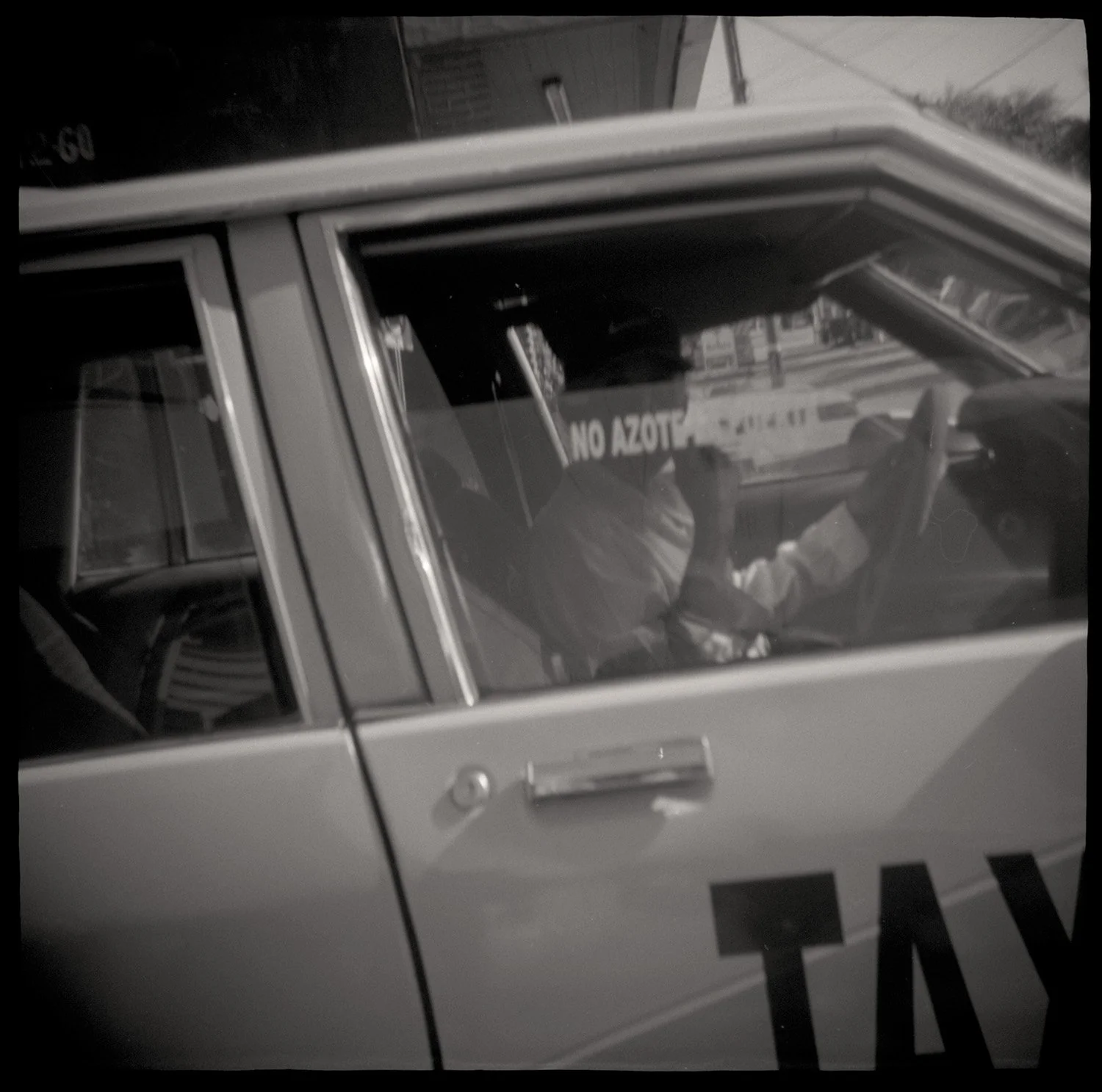
Taxi Driver, San Jose Del Cabo, Mexico
James Spahn’s Diana series uses the imperfections of the Diana camera to create
nostalgic and emotionally fluid images of the American West that reflect postwar American photography. Through his images captured along the road, capturing landscapes, horses, architecture, and quiet moments, he is able to create everlasting pieces while rejecting technical perfections associated with commercial photography. His images combine the sublime qualities of the American landscape with the ordinary realities of America. In this, he transforms spaces easily missed by travelers on the road into an emotionally charged reflection of memory, nostalgia, and travel.
James Spahn was an artist his whole life. One of the first things James told me during the
interview was that he became interested in art and photography in general while watching a TV program with his dad when he was 12. The TV program featured a special on the Shroud of Turin, with photographers and scientists examining it. James mentions that in the program, they said the photographers were from Brooks Institute of Photography. James recounted “And my dad told me, ' Oh, Brooks Institute, that's just up in Santa Barbara, because he worked up here. And I said, " Oh, wow. He goes, it's a really famous photography school. And so that kind of piqued my interest a little bit.”
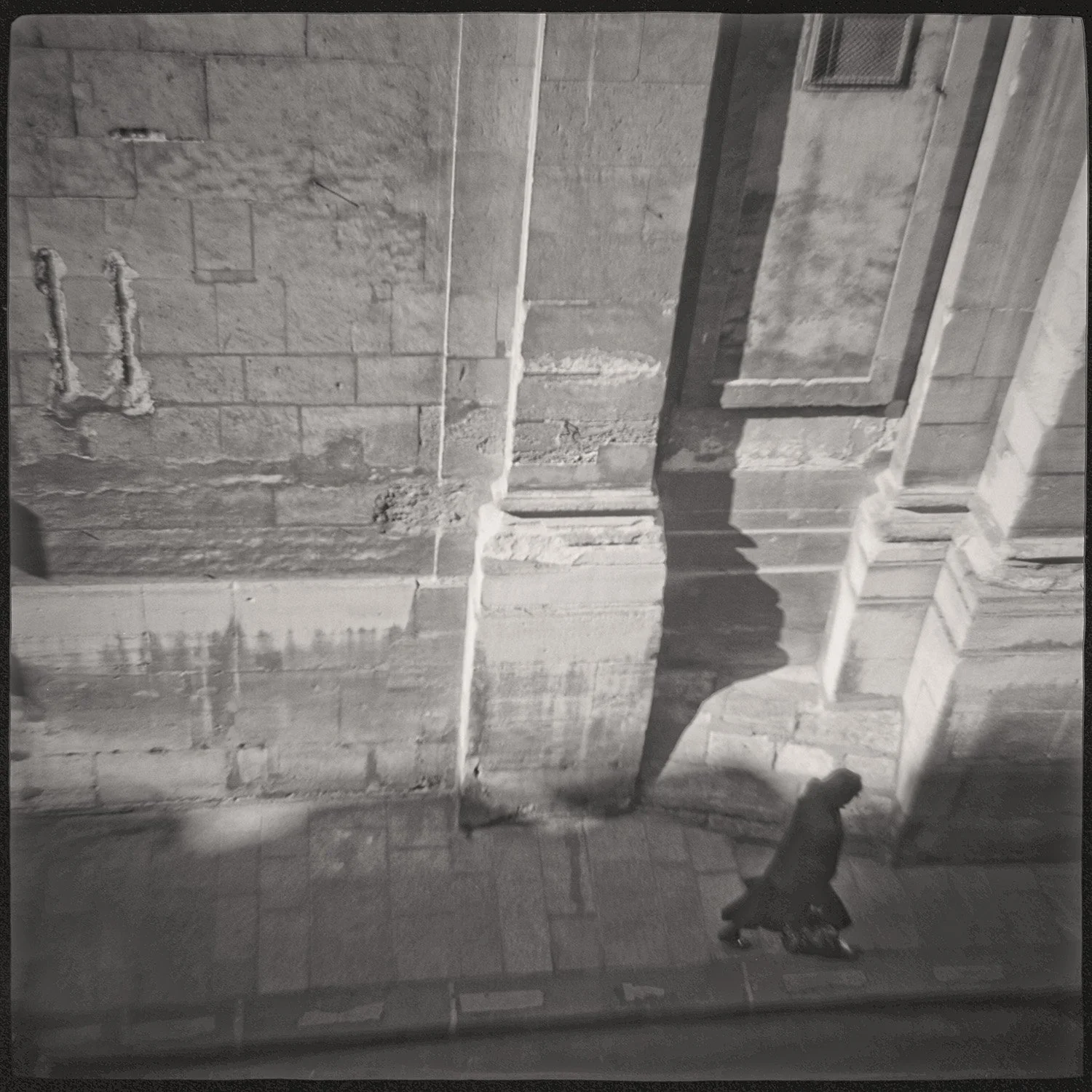
Woman Walking, Paris, France
As James described, this was his first call to the art form. James would then bring his
camera to Colorado, where he worked as a ranchhand. He explains “I spent those five consecutive summers on the ranch being a cowboy, baling hay, fixing fences, but I took that camera with me everywhere. And then every summer when I came back, I would have all those prints made, and then I would build little photo albums.” These experiences working on the ranch would later become visually reflected throughout James’s Diana series. This series focuses on the American West, featuring horses, natural landscapes, and rundown architecture, as seen in photographs such as Two Horses. Visually, the photo has a stillness. The horses are calm, with little movement, and a fence in the lower third of the frame. All photos in this series were taken with 120 Kodak Tri-X film with a notable vignette on the edges. These elements give the photograph its dreamlike effect. This photo is not only a representation of James’ work but also reveals his personal nostalgia and connection to the American West. After James had worked several years working on the ranch and building his artistic vision, he would go on to study architectural & interior design photography at Brooks. In the Brooks photography program, James describes the process as being challenging, but it also gave him his core concepts of photography.
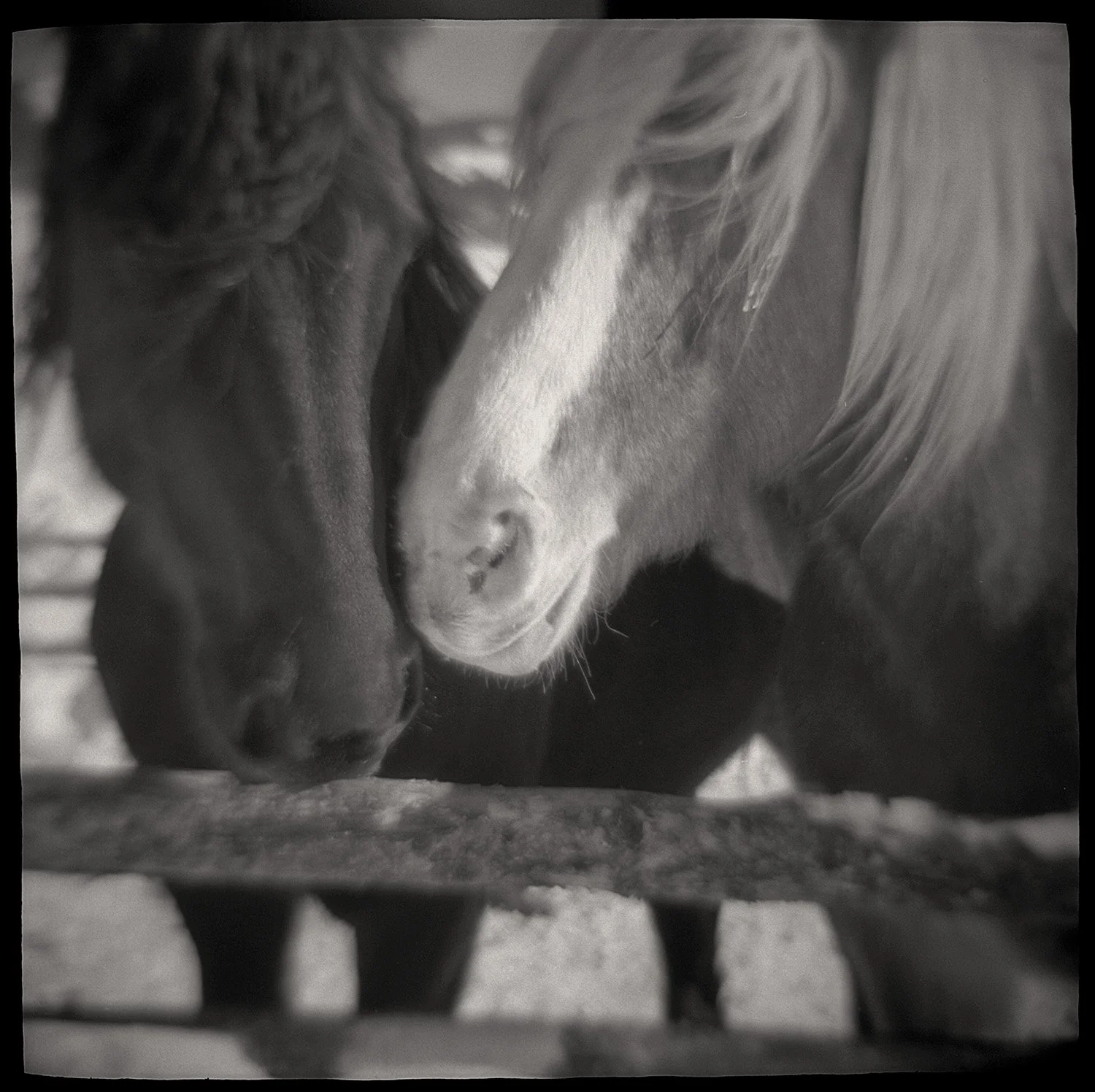
Two Horses
Throughout his travels as an architectural and interiordesign photographer, James would create his Diana series on the road. All of these photographs were shot with the Diana camera, which was first made in Hong Kong in the 1960s known for its imperfections, it became a popular everyday camera known for its soft focus, vignetting, and light leaks. When asked why he chose this camera, James said, “It's more of a dreamlike and painterly effect.” In James’s architectural work and interior design photography, the photography is highly controlled and precise, skills he learned during his time at Brooks. James tells me that “there is little room for error,” as his clients are expecting clear, technical photographs. While James had shaped his technical work from his time at Brooks, his personal work with his Diana camera brings him a sense of peace.
I asked James who some of his biggest inspirations in photography were, and he told me Walker Evans. Evans was known for documenting ordinary American life, especially during the. Like Evans, James is drawn towards roadside architecture and ordinary spaces of Americana. Rather than focusing on larger, more dramatic events, both photographers focus on the American landscape. “I think nostalgia. That’s the word that I would use when I photograph, maybe roadside signs or whatever, it brings me back to when those signs might have been built in the 40s or the 50s, and that takes me back to the photography of Walker Evans.”
Another inspiration James had mentioned was Robert Frank. Frank has a series called The Americans (1958), in which he traveled across America photographing small towns, diners, highways, and ordinary people, rather than focusing on idealized versions of Americans. The themes and ideals of these photographers resemble the freedom and connection James also finds in this style of photography. There are two photos from James’ work that echo the styles of Evans and Frank, both shot in a documentary style that embodies the ideals of street photography. The first photograph, labeled Taxi Driver, San Jose del Cabo, Mexico, shows a man driving a cab, looking into the camera. His face is barely visible, obscured by lettering on the window, and he is wearing a hat and glasses. The photo is taken slightly off its axis, known as “dutch,” which gives the photograph its street style (fig. 2). The second photograph, labeled Woman Walking, Paris, France Features a view from a balcony of a woman walking down a sidewalk. The main subject of this photo is the woman, placed in the bottom-right third. She is walking in a shadow while the wall to her left is illuminated by the sun (Fig. 3). I asked James why he wanted to remain consistent with the Diana especially with these photographs, he explained that, unlike technical precision required in architectural photography, the Diana allowed him to be “footloose and fancy free with it,” embracing the imperfections in a more relaxed shooting process. James also emphasized that “if you’re shooting with a $5,000 Hasselblad or an $8 Diana camera… it doesn't matter. It’s the person behind the camera. You still have to have composition, light, and subject matter.” James continued to reflect on his work, I then brought up the relations between postwar photography and themes that was purposefully thought about when crafting his images.
Before my interview with James, I was doing some research on the subject of postwar photography. Many elements I found in an article by Cecile Whitting, The Sublime and the Banal in Postwar Photography of the American West. In this Article, Whiting compares photographers ranging from Ansel Adams to Ed Ruscha and explains how postwar photographers began blending the traditional sublime landscape with growing banality of suburbia and everydayAmericana. Rather than being opposites, the two began to coexist within the same tradition5
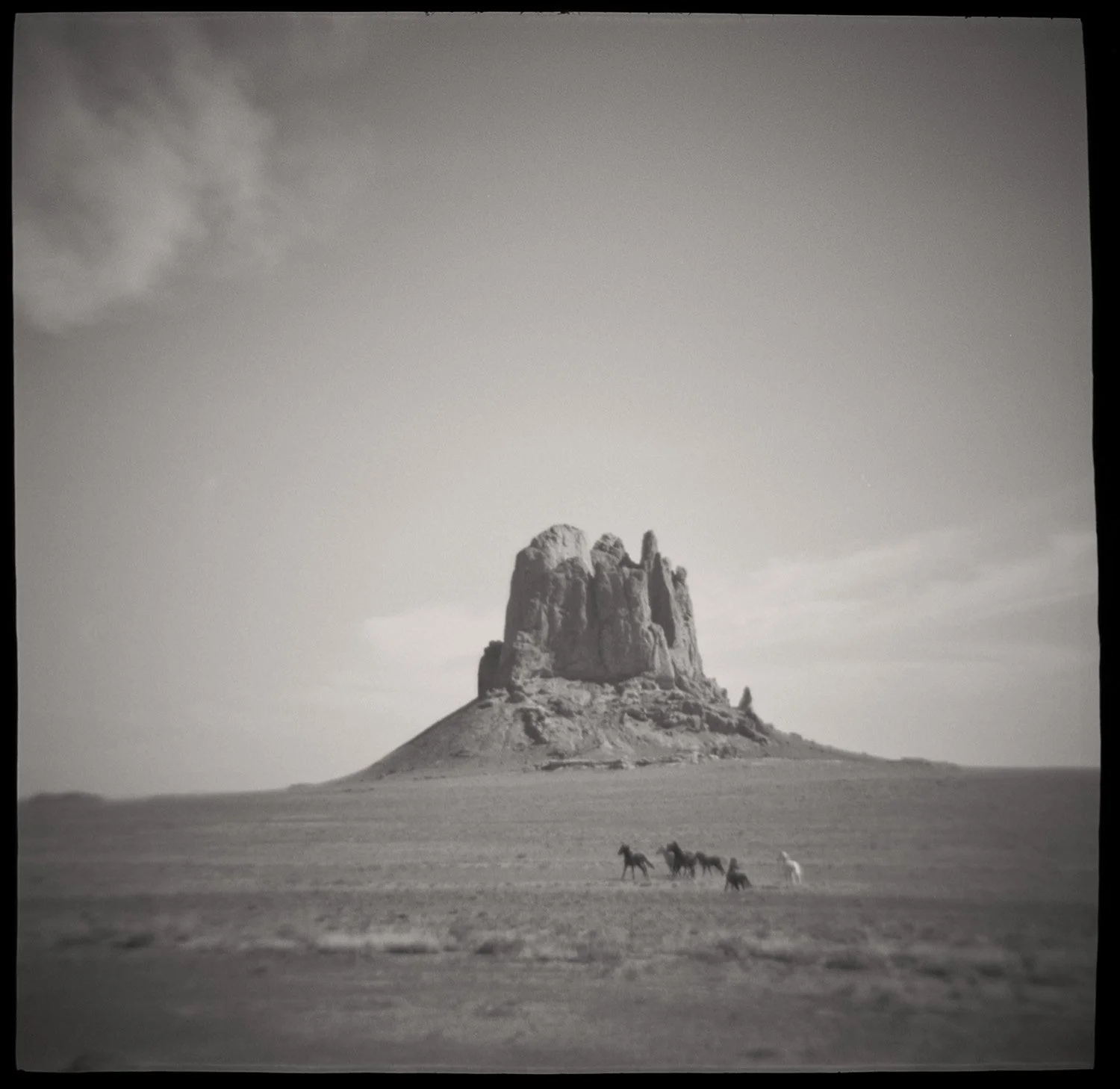
Shiprock, New Mexico
.When I asked James if he considered his work to be “sublime” he simply replied with “no”. For James, it’s about the connection he feels between his subject matter and his interest in the ordinary rundown spaces. One of his images however, resembles classic sublimity talked about by Whitting. The image is titled Shiprock, New Mexico. In the background sits a lonely rock, while in the middle ground horses run towards it. While this image still reflects James’s interest in roadside photography, the scale of the landscape and the vastness of the rock formation create a sense of awe, often rooted to the meaning of sublime. In James’ personal, deeply rooted background with roadside photography, James builds his collection of photographs around his background working on a ranch, and deep roots connected to western culture. Through James’ inspirations from photographers such as Walker Evans and Robert Frank, he was able to shape his own style through a very unique camera, the Diana. His collection of work often resembles elements of Postwar photography featuring many roadsigns, cars, and classic Americana. I am lucky enough to have been behind the scenes onmany of these photos whilst between jobs. I am also thankful for all the unforgettable memories and appreciations for the road and photography he has shared with me, thank you Dad. You are a badass photographer.